- English
- 简体中文
- Afrikaans
- שפה עברית
- icelandic
- Hrvatski
- Монгол хэл
- Lëtzebuergesch
- Español
- Português
- русский
- Français
- 日本語
- Deutsch
- tiếng Việt
- Italiano
- Nederlands
- ภาษาไทย
- Polski
- 한국어
- Svenska
- magyar
- Malay
- Dansk
- Suomi
- Türkçe
- العربية
- Indonesia
- Norsk
- český
- ελληνικά
- فارسی
- български
- Latine
- Slovenský jazyk
- Slovenski
- Srpski језик
- বাংলা ভাষার
- हिन्दी
- Pilipino
- Gaeilge
- تمل
- український
- Javanese
- தமிழ்
- नेपाली
- Burmese
- ລາວ
- Қазақша
- Azərbaycan

How Are Screwdriver Bits Evolving for Modern Electronics Assembly?
As electronics manufacturing moves toward higher precision, greater assembly consistency, and more demanding production environments, Screwdriver Bits are becoming an increasingly important part of professional fastening systems. While fastening tools were once evaluated mainly by durability and basic compatibility, modern assembly operations now place greater emphasis on torque transmission, dimensional accuracy, wear resistance, operator comfort, and process stability.
This shift is particularly visible in electronics assembly, where miniature screws, delicate components, compact housings, and high-volume fastening tasks require a controlled and repeatable approach. Tooling manufacturers are therefore developing fastening accessories with improved material performance and more precise manufacturing processes to support increasingly sophisticated production requirements.
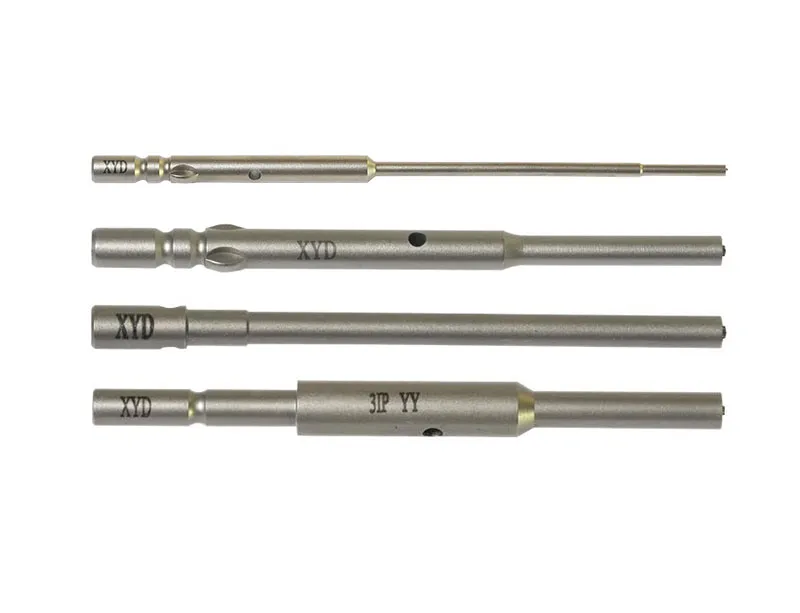
Why Precision Fastening Matters in Electronics Manufacturing
Electronic products are becoming smaller while their internal structures are becoming more complex. Components, circuit boards, connectors, sensors, battery assemblies, and precision housings often need to be secured within limited spaces. A fastening system that lacks adequate control can affect assembly quality, product appearance, and long-term reliability.
For this reason, the interface between the driver and the fastener has become an important engineering consideration. The bit must engage securely with the screw head while transferring rotational force efficiently. Poor engagement can increase the possibility of slippage, surface damage, premature wear, or inconsistent fastening results.
In automated and semi-automated production environments, consistency becomes even more important. Operators and production engineers need fastening components that can maintain stable performance throughout repeated assembly cycles. This has encouraged the industry to move beyond basic tool accessories toward components designed around specific fastening requirements.
Improved Engagement Between Tool and Fastener
A precise interface helps distribute driving force more effectively across the contact surfaces. When the geometry of the bit and screw head is properly matched, the risk of unwanted movement during fastening can be reduced.
This is particularly valuable when working with small screws or fasteners made from materials that are sensitive to excessive force. Stable engagement can help maintain the integrity of the screw head and support a more controlled fastening process.
Consistency Across Repeated Assembly Operations
Production lines often require the same fastening operation to be repeated throughout an extended manufacturing cycle. Variations in tooling condition can gradually influence assembly performance. A high-quality fastening accessory therefore needs to maintain its functional geometry and mechanical characteristics under continuous use.
Consistent performance contributes to a more predictable assembly process, allowing manufacturers to reduce unnecessary tool changes and maintain stable production workflows.
Material Selection Is Becoming More Important
The performance of a fastening accessory depends heavily on the material used during manufacturing. Repeated mechanical loading, friction, impact, and contact with different fastener materials can gradually affect the working end of the tool.
Modern manufacturers are paying closer attention to alloy selection, heat treatment, surface finishing, and precision machining. These factors influence hardness, toughness, dimensional stability, and resistance to wear.
For electronics assembly, material selection must achieve an appropriate balance. Excessive hardness without sufficient toughness can make a component more vulnerable to fracture under certain operating conditions. On the other hand, insufficient hardness can accelerate deformation and wear.
Balancing Hardness and Toughness
Professional fastening components are expected to withstand repeated torque while maintaining their original working geometry. This requires carefully controlled material properties rather than relying on hardness alone.
Heat treatment can be used to optimize mechanical performance, while precision machining helps ensure that the finished component maintains the intended dimensional characteristics. Together, these processes support reliable engagement with fasteners during demanding assembly applications.
Surface Treatment and Wear Resistance
Surface condition can also influence service performance. Friction occurs whenever the driving tool interacts with the fastener, and repeated contact may gradually affect the working surfaces.
Appropriate surface treatment can improve resistance to wear and help maintain the functional condition of the tool. Depending on the application, manufacturers may consider different finishing technologies to support durability, corrosion resistance, or smoother interaction with the fastener.
Design Trends Supporting More Controlled Assembly
The development of modern fastening systems is closely connected with the broader trend toward process control. Instead of treating the driver, fastener, and operator as separate elements, manufacturers increasingly consider the entire fastening process as an integrated system.
This approach has encouraged improvements in geometry, dimensional consistency, torque transmission, and compatibility with intelligent driving equipment. The objective is not simply to make a component stronger, but to make the complete fastening operation more predictable.
Optimized Geometry for Better Torque Transmission
Geometry plays a direct role in how rotational force is transferred from the driver to the fastener. An accurately manufactured working profile can improve contact between the tool and screw head, helping reduce unnecessary movement during operation.
For precision assembly, even small dimensional variations can influence engagement. Manufacturers therefore need reliable machining and inspection processes to maintain consistency across production batches.
Compatibility With Intelligent Driving Systems
Intelligent screwdrivers are introducing new possibilities for fastening process management. Modern systems can monitor operating conditions and provide greater control over torque and insertion depth. This creates new requirements for the components used at the working end of the tool.
A well-matched accessory should support the accuracy of the driving system rather than become a source of unnecessary variation. Stable dimensions, appropriate material characteristics, and reliable engagement are therefore becoming increasingly relevant in intelligent assembly applications.
Miniaturization Is Changing Fastening Requirements
Miniaturization remains one of the most influential trends in electronics manufacturing. Consumer electronics, communication equipment, sensors, medical electronics, and industrial control devices are all moving toward compact structures and higher component density.
As available assembly space becomes more limited, fastening tools need to operate within increasingly constrained environments. Small screw heads may require carefully matched profiles, while delicate surrounding components leave little room for positioning errors.
This trend has increased demand for specialized fastening components rather than one general-purpose solution for every application. Different screw head designs, recess geometries, materials, and assembly conditions may require different tooling configurations.
Specialized Profiles for Different Applications
Fastening applications can involve slotted, cross-recessed, and other screw head configurations. Metric and imperial fastening systems may also require different dimensional specifications.
Professional tool manufacturers therefore need to maintain a broad range of configurations while also supporting application-specific requirements. Custom profiles can be particularly useful when standard tooling does not provide the required engagement or operating characteristics.
Working in Confined Assembly Areas
Compact electronic assemblies often place fastening locations close to connectors, housings, wiring, or sensitive components. The tool must therefore provide accurate engagement without creating unnecessary interference with surrounding structures.
This is one reason why dimensional precision and appropriate profile selection matter beyond basic compatibility. The right configuration can make fastening easier to control and help reduce avoidable assembly problems.
Quality Control Is Moving From Inspection to Process Assurance
Manufacturers are increasingly viewing quality as a continuous process rather than a final inspection activity. For fastening components, this means paying attention to material consistency, machining accuracy, heat treatment, surface condition, and dimensional control throughout production.
Quality assurance begins with incoming materials and continues through machining, treatment, inspection, assembly, and final testing. A stable manufacturing process makes it easier to identify variation before it affects finished products.
| Manufacturing Consideration | Importance in Assembly |
|---|---|
| Material consistency | Supports stable mechanical performance |
| Dimensional accuracy | Improves engagement with fasteners |
| Surface condition | Helps manage friction and wear |
| Profile precision | Supports reliable torque transfer |
| Process inspection | Helps maintain batch-to-batch consistency |
For manufacturers operating demanding electronics assembly lines, this process-oriented approach can provide greater confidence in tool performance. It also supports more effective cooperation between tooling suppliers and equipment manufacturers when developing application-specific fastening solutions.
Ergonomics Still Matter in Manual Assembly
Although automation continues to expand, manual and semi-automatic fastening remain important in electronics production, product repair, laboratory assembly, and specialized manufacturing. In these environments, the relationship between the operator and the tool can influence both efficiency and assembly consistency.
A fastening component that works effectively with an ergonomic driver can contribute to smoother operation. Reduced slipping, stable engagement, and predictable torque transfer can make repetitive tasks easier to control.
Operator comfort is especially relevant when fastening operations continue throughout an extended production cycle. Tool design, handle structure, balance, visibility, and working-end stability can all contribute to a more practical assembly experience.
Visibility and Working Accuracy
Small electronic components can make it difficult for operators to clearly see the fastening location. Integrated lighting on intelligent driving tools can improve visibility around the working area, particularly when components are positioned inside compact housings.
Better visibility does not replace precise tooling, but it can help the operator align the tool correctly and maintain a more consistent working position.
Customization Is Becoming a Practical Manufacturing Requirement
Standardized products remain important, but industrial applications do not always follow a single standard. Different screw specifications, assembly structures, material combinations, and production processes can create application-specific tooling requirements.
Customization can involve the working profile, dimensions, material selection, surface treatment, or compatibility with a particular fastening system. The objective is to match the tooling solution with the actual assembly conditions rather than forcing a production process to adapt to an unsuitable standard component.
For engineering teams, effective customization also requires communication between the tool manufacturer and the end application. Understanding screw geometry, fastening conditions, expected workload, and driver characteristics allows manufacturers to recommend a more appropriate configuration.
Application-Based Tooling Selection
Tool selection should begin with the fastener and the assembly environment. Engineers should consider the screw head profile, material, required engagement, driver type, working space, and expected frequency of use.
For automated applications, compatibility with the driving system and process requirements should also be evaluated. For manual operations, ergonomics and ease of handling may receive greater attention.
This application-oriented method helps prevent common problems caused by choosing tooling based only on appearance or basic size compatibility.
What Electronics Manufacturers Should Evaluate
When selecting fastening accessories for electronics assembly, several technical factors deserve consideration. The first is dimensional compatibility. The working profile should correspond closely with the fastener to provide stable engagement.
The second is material performance. Applications involving repetitive fastening require components capable of maintaining their geometry under mechanical stress and friction.
The third is process compatibility. If the fastening system uses intelligent torque control or depth monitoring, the tooling should support the overall accuracy of that system.
The fourth is expected service life. Long-running production environments can benefit from durable components that maintain performance over repeated operations.
Finally, manufacturers should consider supply capability and customization support. Consistent quality is more useful when the supplier can also provide stable production capacity, technical communication, and configurations suited to different assembly requirements.
A Practical Evaluation Framework
A structured evaluation can help engineering teams compare different solutions more effectively. Rather than focusing on a single specification, manufacturers can review the entire operating environment.
- Check compatibility with the intended fastener profile.
- Review dimensional consistency and manufacturing precision.
- Consider material properties and expected wear conditions.
- Evaluate torque transmission and engagement stability.
- Confirm compatibility with manual or intelligent driving equipment.
- Assess customization options for specialized applications.
- Review quality control and production consistency.
This broader approach can help manufacturers identify tooling that supports the complete fastening process rather than simply replacing a worn component.
The Direction of Professional Fastening Technology
The future of electronics fastening will likely continue toward greater precision, integration, and process visibility. As intelligent manufacturing systems collect more information from assembly operations, tooling components will increasingly be expected to work as part of a connected production environment.
Data-driven manufacturing places greater importance on repeatability. When a production system monitors torque, insertion depth, fastening status, or other process conditions, variation in the mechanical interface can become more visible.
This means that seemingly small components can have a meaningful influence on overall process stability. High-quality tooling is no longer simply an accessory. It can form an important part of the interface between the fastening machine and the finished product.
From Basic Accessories to Engineered Components
The industry is gradually moving away from viewing fastening accessories as disposable or interchangeable items with limited technical significance. Instead, manufacturers are treating them as engineered components that require careful consideration of materials, geometry, manufacturing precision, and application compatibility.
This change reflects the increasing complexity of electronics manufacturing. When products become smaller and assembly tolerances become tighter, every part of the production process needs to work together effectively.
For tooling manufacturers, this creates opportunities to combine precision manufacturing with application knowledge. For electronics manufacturers, it provides more options for building stable and efficient fastening processes.
Building a More Reliable Assembly Process
Reliable fastening does not depend on the driver alone. The fastener, tooling component, machine settings, operator technique, and assembly environment all influence the final result. A well-designed system considers these elements together.
High-quality Screwdriver Bits can provide the stable mechanical connection needed between the driving tool and the screw. When combined with appropriate torque control, accurate positioning, and suitable process parameters, they can support repeatable fastening performance across a wide range of electronics applications.
For manufacturers, the key is to select tooling based on actual production conditions rather than treating every fastening task as identical. Application requirements, screw design, operating frequency, available space, and equipment configuration should all be considered before final selection.
Why Specialized Manufacturing Capability Matters
As demand for precision fastening continues to grow, the capabilities of the tooling manufacturer become increasingly important. Product development, material engineering, machining, quality control, and customization need to work together to provide a consistent solution.
A manufacturer with experience in intelligent fastening equipment can also better understand how the working component interacts with the complete screwdriver system. This knowledge can support more practical recommendations for electronics assembly applications.
Kunshan Yumao Electronics Co., Ltd., based in Kunshan, Jiangsu, has focused on intelligent screwdriver technology and related fastening solutions for the electronics industry. The company develops and manufactures intelligent screwdrivers together with precision screwdriver accessories, supporting applications where controlled torque, accurate fastening, durability, and operator usability are important.
Its manufacturing approach covers both standard and customized configurations, allowing different screw profiles, dimensions, and application requirements to be addressed. The company also emphasizes long service life, precision manufacturing, and production consistency for professional assembly environments.
With its experience in intelligent fastening technology and dedicated production capabilities, Kunshan Yumao Electronics Co., Ltd. provides a practical option for electronics manufacturers seeking integrated fastening tools and application-specific solutions. As electronics assembly continues to demand greater precision and process control, specialized manufacturers such as Yumao are positioned to play an important role in the development of more reliable and efficient fastening systems.